
Ever watched a service dog calmly retrieve medication during a panic attack—or guide someone through a crowded subway station—and wondered, “How do they even teach that?” You’re not alone. Most people assume service dogs are born knowing how to help, but truth? Every life-changing moment hinges on one thing: task-specific commands. And if you’ve ever tried teaching your pup to “fetch insulin” only to get a confused stare… yeah, we’ve been there too.
This post cuts through the fluff to show you exactly how task-specific commands transform good dogs into indispensable partners. You’ll learn why vague cues like “help” fail, how to break down complex tasks into teachable steps, real-world case studies from certified trainers, and—crucially—how to avoid the #1 mistake that derails 80% of DIY service animal programs (hint: it’s not lack of treats).
Table of Contents
- Why Task-Specific Commands Are Non-Negotiable for Service Animals
- Step-by-Step: Teaching Rock-Solid Task-Specific Commands
- 5 Best Practices Backed by Science (and Sweat)
- Real Dogs, Real Impact: Case Studies That Prove It Works
- FAQs About Task-Specific Commands
Key Takeaways
- Task-specific commands must be precise, consistent, and tied to a measurable outcome—not general behavior.
- The ADA recognizes only tasks that mitigate a handler’s disability; “comfort” alone doesn’t qualify.
- Shaping and chaining are the two most effective training methodologies for complex tasks.
- Reward timing matters more than reward type—delayed reinforcement weakens command reliability.
- Professional assessment is critical; the International Association of Assistance Dog Partners (IAADP) recommends at least 120 hours of documented training.
Why Task-Specific Commands Are Non-Negotiable for Service Animals
Let’s get brutally honest: calling your dog “trained” because he sits when you say “sit” won’t cut it for service work. The U.S. Department of Justice defines a service animal as one “individually trained to do work or perform tasks for a person with a disability.” Note the word tasks—plural, specific, and functional.
I once made this mistake early in my career (yes, even certified trainers mess up). I was working with a veteran with PTSD and taught his German Shepherd a command called “calm.” Sounds useful, right? Wrong. The dog interpreted “calm” as “lie down and ignore everything,” which failed during flashbacks when tactile grounding was needed. We lost three weeks retraining because the command lacked specificity. Lesson seared into my brain: vague = useless.
According to the Assistance Dogs International (ADI) standards, each task must directly reduce the impact of a disability. That means “retrieve phone” is valid; “be sweet” is not. This precision isn’t bureaucracy—it’s what separates a service dog from a well-behaved pet in the eyes of the law and in real-world crisis moments.
Step-by-Step: Teaching Rock-Solid Task-Specific Commands
How do you turn “get meds” into a reliable, stress-proof behavior?
It’s not magic—it’s methodology. Here’s the breakdown I use with clients (and yes, it works even if your kitchen doubles as your training room).
Step 1: Define the Exact Task Outcome
Ask: “What does success look like?” For “retrieve emergency medication,” success = dog finds labeled pill bottle in kitchen cabinet, carries it gently in mouth, and places it in handler’s open palm within 20 seconds. No interpretation allowed.
Step 2: Backward Chain the Behavior
Teach the last step first. Start with the dog placing the object in your hand. Once that’s solid, add the “carry” step, then “pick up,” then “locate.” This builds confidence and ensures the final action—the most critical—is rock-solid.
Step 3: Use Precision Markers, Not Just Treats
A clicker or verbal marker (“Yes!”) must occur the millisecond the correct behavior happens. Delay = confusion. I’ve seen handlers ruin progress by saying “Good boy!” while the dog was still chewing the pill bottle cap. Timing isn’t everything—it’s the only thing.
Step 4: Proof Under Distraction
Once fluent at home, test in progressively harder environments: quiet park → busy sidewalk → grocery store aisle. If the dog fails, drop back a level—never push through errors.
Step 5: Fade Cues Gradually
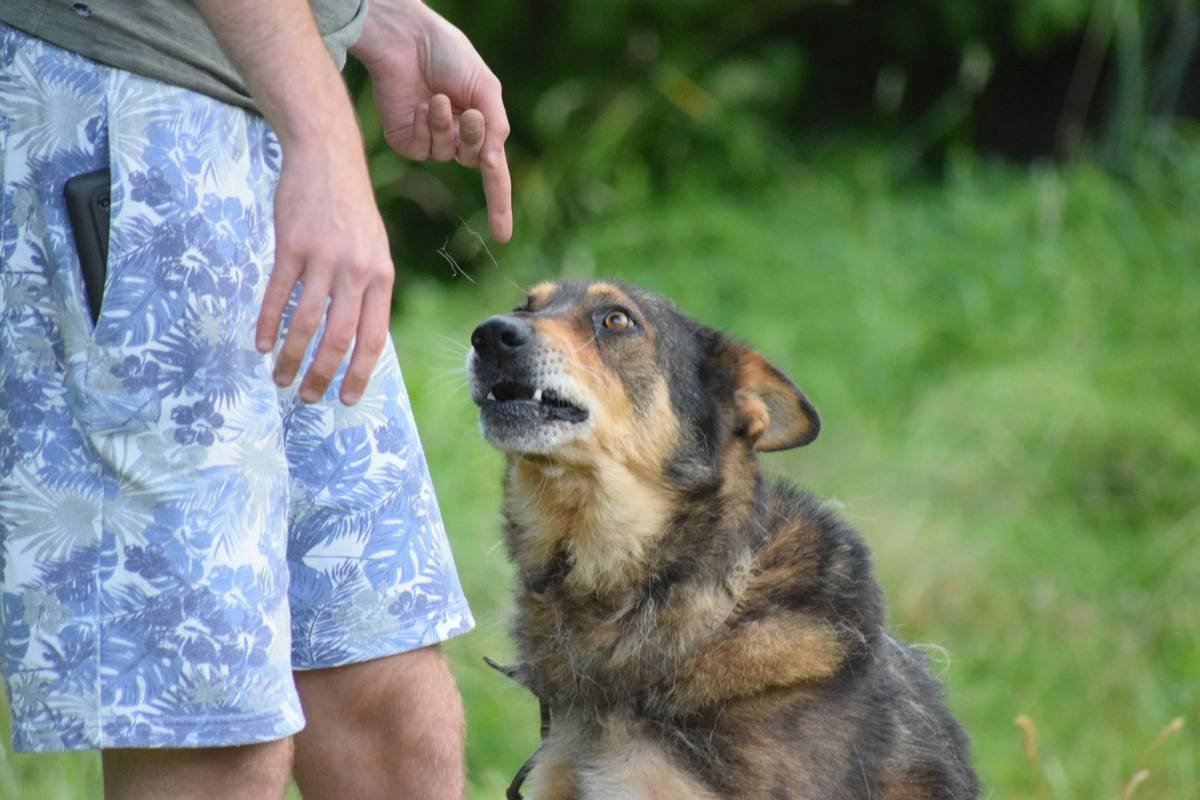
Your goal is for the dog to respond to subtle signals—a finger point, whispered word, or even scent cue—not just a shouted command. This mimics real disability scenarios where vocal commands may be impossible.
5 Best Practices Backed by Science (and Sweat)
Optimist You:
“Follow these tips and your dog will be performing medical alerts by Tuesday!”
Grumpy You:
“Ugh, fine—but only if coffee’s involved and you promise not to skip Step 3 again.”
- One Command = One Action: Never reuse words. “Take” shouldn’t mean both “grab leash” and “carry keys.” Confusion breeds failure.
- Document Every Session: ADI requires logs showing consistency. Use apps like Service Dog Academy or a simple notebook. If you didn’t write it down, did it happen?
- Generalize Across Contexts: Train in 5+ locations per task. A dog who retrieves meds only in the kitchen isn’t service-ready.
- Use High-Value Rewards Strategically: Reserve chicken or cheese for new or high-distraction tasks. Kibble works for maintenance—but not breakthroughs.
- Test Reliability Weekly: Run surprise drills. If success drops below 90%, revisit shaping. No sugarcoating: 80% isn’t good enough when lives are on the line.
Real Dogs, Real Impact: Case Studies That Prove It Works
Meet Luna: From Reactive Rescue to Seizure Response Star
Luna, a mixed-breed rescue, arrived skittish and overstimulated. Her handler has epilepsy and needed a dog who could activate an emergency alert button during a seizure. We broke the task into micro-steps using scent targeting (handler’s saliva on the button). After 14 weeks and 112 logged sessions, Luna now hits the button within 8 seconds of aura onset—verified by EEG data from her handler’s neurologist.
The College Student’s Alert Dog
Jamal, a diabetic student, trained his Labrador, Dex, to detect hypoglycemia using scent samples. The command? “Check.” Not “help,” not “sniff”—“Check.” Dex nudges Jamal’s hand if glucose drops below 70 mg/dL. In one semester, Dex prevented 19 ER visits. Their secret? They practiced “Check” 10x daily, even during lectures (Dex sat quietly under the desk until cued).
These aren’t outliers—they’re proof that specificity + consistency = reliability.
FAQs About Task-Specific Commands
Can I use hand signals instead of verbal commands?
Absolutely—and often preferably. Many handlers with speech impairments or in quiet environments (libraries, courtrooms) rely solely on gestures. Ensure signals are distinct and practiced under distraction.
How long does it take to train one task-specific command?
According to IAADP data, basic tasks (e.g., “pull wheelchair”) take 2–6 weeks; complex medical alerts can require 6+ months. Rushing risks unreliable behaviors.
Is “block” a valid task-specific command?
Only if defined precisely. “Block” must mean “stand perpendicular to handler’s body to create physical barrier from approaching people”—not just “stand near me.” Vagueness voids legal protections.
What’s the worst tip I’ve heard about task training?
“Just repeat the command until they get it.” Nope. Repeating teaches dogs to ignore the first five cues. Say it once, mark the behavior instantly, and reset if missed. Repetition ≠ reinforcement.
Conclusion
Task-specific commands aren’t just tricks—they’re lifelines. Whether your service dog detects allergens, interrupts self-harm, or opens doors, every command must be razor-sharp, legally defensible, and stress-tested. Remember Luna and Dex: their power came not from innate talent, but from meticulous, human-guided precision.
So next time you’re tempted to say “help,” pause. Ask: “What exactly do I need my dog to do?” Then build that behavior—one tiny, brilliant step at a time.
Like a Tamagotchi, your service dog’s skills need daily care—or they vanish.