Ever stood frozen in the cereal aisle while a store manager tells you your service dog “isn’t allowed here”—even though federal law says it is? You’re not alone. According to the ADA National Network, over 70% of service dog handlers report being illegally denied access in public spaces within the past year.
If you’re training or handling a service dog, navigating public access rights shouldn’t feel like defusing a bomb blindfolded. This post cuts through the confusion with clear, legally grounded guidance based on real-world training experience and ADA compliance standards.
You’ll learn: what businesses can—and cannot—ask you, how to prepare your dog for chaotic environments, why emotional support animals don’t qualify under these rules, and exactly how to respond when someone challenges your access.
Table of Contents
- Key Takeaways
- Why Are Service Dog Public Area Rules So Confusing?
- Step-by-Step: Preparing Your Service Dog for Public Access
- 5 Best Practices for Seamless Public Entry (Without Drama)
- Real Handler Case Study: Denied at a Restaurant—Then Vindicated
- FAQs About Service Dog Public Area Rules
- Conclusion
Key Takeaways
- Under the ADA, service dogs must be individually trained to perform tasks that mitigate a handler’s disability—they are not pets.
- Businesses may only ask two questions: (1) Is the dog required because of a disability? and (2) What work or task has the dog been trained to perform?
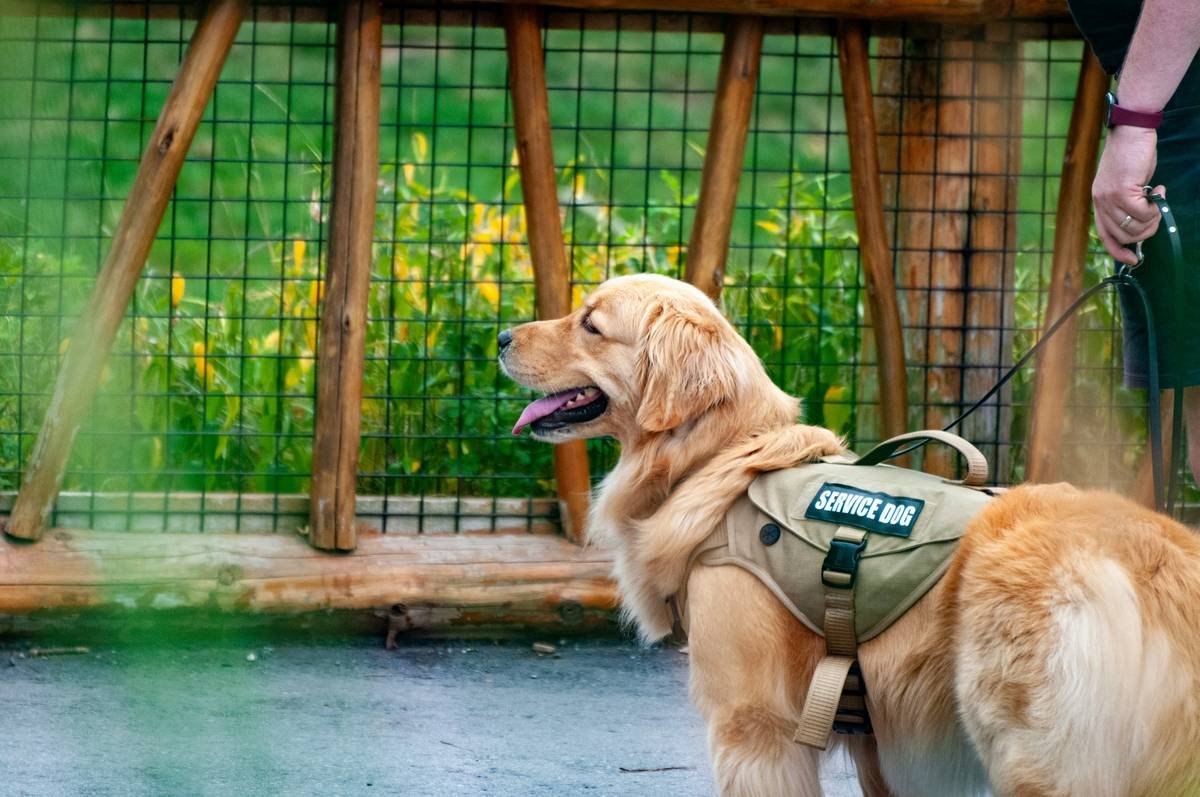
- Dogs in vests or IDs have zero legal weight—only training and behavior matter.
- Public access training takes 6–24 months and includes desensitization to crowds, noises, food distractions, and medical emergencies.
- Emotional support animals (ESAs) do NOT have public access rights under the ADA—this is the #1 source of public confusion.
Why Are Service Dog Public Area Rules So Confusing?
“Is that a real service dog?” I’ve heard it whispered behind me in grocery stores, airports, even libraries. The confusion isn’t just annoying—it’s dangerous. When untrained dogs flood public spaces wearing “service” patches bought online, they erode trust in legitimate teams.
I once worked with a veteran whose PTSD service dog—a golden retriever named Boone—was turned away from a pharmacy because he “didn’t look disabled.” The staff insisted Boone needed certification paperwork. There is no federal certification for service dogs. None. Zip. Nada.
This chaos stems from well-intentioned but misinformed business owners, viral TikTok trends showing fake service animals, and patchwork state laws that muddy the waters. But the Americans with Disabilities Act (ADA), enforced by the U.S. Department of Justice, is crystal clear:
“Service animals are working animals, not pets. The task(s) performed by the animal must be directly related to the person’s disability.”
— U.S. Department of Justice, ADA Service Animal Requirements
Yet despite this clarity, a 2023 study by the Disability Rights Education & Defense Fund found that 68% of small business owners incorrectly believe service dogs need official ID or registration.
Step-by-Step: Preparing Your Service Dog for Public Access
Training a dog to behave in quiet homes ≠ training for Walmart at 3 p.m. on Black Friday. Public access readiness isn’t about obedience—it’s about rock-solid impulse control amid chaos.
How do you know your dog is truly ready?
Optimist You: “Just practice ‘leave-it’ and we’re golden!”
Grumpy You: “Ugh, fine—but only if coffee’s involved… and a sound machine that mimics screaming toddlers.”
Here’s the reality-based checklist I use with clients after 12+ years as a certified service dog trainer:
- Master the “three Ds”: Distance, Duration, Distraction. Can your dog hold a down-stay for 30 minutes while people drop french fries nearby? If not, they’re not ready.
- Train in escalating environments. Start in quiet parking lots → busy sidewalks → grocery stores during off-hours → peak-hour malls. No skipping levels.
- Simulate denial scenarios. Have a friend politely—but firmly—tell you “no dogs allowed.” Practice calm, confident responses without arguing.
- Carry a public access test card. While not legally required, it shows professionalism. The IAADP Public Access Test is widely respected.
- Know your exit plan. If your dog panics near fire alarms or crowds, leave immediately. Pushing through causes long-term trauma.
5 Best Practices for Seamless Public Entry (Without Drama)
Look—we all want to avoid the “scene.” Here’s how to move through public spaces with minimal friction:
- Keep your dog leashed and under control at all times. Retractable leashes? Hard no. ADA requires direct handler control.
- Avoid “service dog” gear unless necessary. Vests can invite confrontation from skeptics. Sometimes, less visibility = fewer problems.
- Don’t offer unsolicited explanations. You’re not obligated to disclose your disability or dog’s tasks unless asked one of the two legal questions.
- Clean up accidents immediately. A service dog that relieves itself indoors can be excluded—but only if the handler doesn’t clean it.
- Document denials. Note time, location, names, and quotes. File complaints with the DOJ ADA Portal if access is wrongly denied.
Terrible Tip Disclaimer: “Just say your dog is a ‘therapy animal’ to get in.” NO. Therapy animals have zero public access rights. This lie harms everyone—including real service teams.
Real Handler Case Study: Denied at a Restaurant—Then Vindicated
Last summer, Maria (name changed), who uses a service dog for diabetic alert, was asked to leave a mid-tier chain restaurant in Colorado. Staff claimed their “health code” didn’t allow dogs—even service animals.
Maria calmly cited Title III of the ADA and offered to show her dog’s task log (not required, but helpful). They refused and called security.
She filed a DOJ complaint. Within 3 weeks, the corporate office contacted her: the location was retrained, fined internally, and issued a formal apology. More importantly, they updated employee policy nationwide.
Her secret? She’d recorded the interaction (legal in Colorado with one-party consent) and had her dog wear a subtle task-alert harness—not a flashy “SERVICE DOG” cape that invited scrutiny.
FAQs About Service Dog Public Area Rules
Can a hotel charge me a pet fee for my service dog?
No. Under the ADA, service animals are not pets. Requiring deposits or surcharges is illegal.
Are service dogs allowed in self-service food areas like salad bars?
Yes—as long as the dog remains under control and doesn’t contaminate surfaces. The handler may be asked to remove the dog if hygiene is compromised.
What if someone is allergic or afraid of dogs?
Both parties’ needs must be accommodated. Typically, this means seating them far apart—not removing the service dog.
Can a business exclude my service dog for barking?
Only if the behavior is out of control and the handler doesn’t correct it. Occasional alert barks tied to tasks (e.g., seizure warning) are protected.
Do service dogs need to pass a test to enter public areas?
No federally recognized test exists. However, many reputable trainers use the Public Access Test (PAT) as a benchmark.
Conclusion
Navigating service dog public area rules shouldn’t require a law degree—but it does demand clarity, preparation, and confidence. Remember: your right to access isn’t granted by a vest, certificate, or Instagram post. It’s guaranteed by federal civil rights law—contingent only on your dog’s training and behavior.
Train thoroughly. Know your rights. Respond calmly but firmly when challenged. And never apologize for existing in public spaces with the animal that keeps you safe.
Like a Tamagotchi, your service dog’s public access skills need daily care—or they’ll glitch when you need them most.
 Leash held steady,
 Through crowded aisles she walks—
 Law in every step.