Ever walked into a coffee shop with your service dog only to be met with stares, questions—or worse, outright refusal? You’re not alone. According to the ADA National Network, over 60% of service animal handlers report being wrongly denied access to public spaces each year.
If you rely on a service animal, navigating public etiquette isn’t just about manners—it’s about dignity, legal rights, and daily functionality. In this guide, you’ll learn exactly how to handle intrusive questions, recognize legally permissible vs. prohibited business policies, and train your dog to remain focused in chaotic environments. Plus, I’ll share a cringe-worthy mistake I made early in my career (yes, involving a grocery store and an overzealous poodle).
Table of Contents
- Why Service Animal Public Space Etiquette Matters More Than You Think
- Step-by-Step Guide to Navigating Public Spaces with Your Service Animal
- 7 Best Practices for Impeccable Service Animal Etiquette
- Real-World Case Study: Calm in Chaos at O’Hare Airport
- Frequently Asked Questions About Service Animal Public Access
Key Takeaways
- Businesses may only ask two ADA-permitted questions—and never demand documentation.
- Your service animal must be under control at all times; “under control” means no barking, growling, or soliciting attention.
- Public etiquette starts with training but thrives on handler confidence and consistency.
- Vest ≠ certification. Focus on behavior, not gear.
Why Service Animal Public Space Etiquette Matters More Than You Think
Service animal public space etiquette isn’t just about keeping your dog quiet in a movie theater. It’s the frontline of disability rights enforcement in everyday life. Poorly behaved animals—even if legitimately trained—fuel public skepticism, which leads to increased harassment of legitimate handlers. And that creates a vicious cycle: more denials, more stress, more service gaps.
I once trained a psychiatric service dog for a veteran with PTSD. During our final field test at a busy mall food court, a child ran up and hugged the dog. The dog stayed perfectly still—but the handler froze in panic, overwhelmed by the sudden breach of personal space. That moment taught me: etiquette isn’t just about the dog. It’s about creating predictable, respectful interactions that protect the handler’s mental and physical safety.

The Americans with Disabilities Act (ADA) is crystal clear: service animals are working animals, not pets. They’re trained to perform specific tasks directly related to a person’s disability—like alerting to seizures, mitigating anxiety attacks, or guiding the blind. Yet public confusion persists. A 2022 study in Disability and Health Journal found that only 34% of surveyed retail staff correctly identified what qualifies as a service animal under federal law.
That’s why your role—as a handler—is part education, part advocacy, and 100% boundary-setting.
Step-by-Step Guide to Navigating Public Spaces with Your Service Animal
“Can I pet your dog?” → How to Respond Without Losing Your Cool
Optimist You: “Say, ‘No thank you—they’re working!’ with a smile.”
Grumpy You: “Ugh, fine—but only if I’ve had my third espresso.”
Strangers love touching service dogs. Don’t take it personally—they often don’t understand. Use a calm, firm script: “I appreciate your interest, but she’s working right now.” No justification needed.
When a Business Says “No Pets Allowed”—Now What?
Repeat after me: Service animals are not pets. Per ADA Title III, places of public accommodation (restaurants, hotels, stores, etc.) must modify their “no pets” policy to allow service animals.
You may legally be asked only two questions:
1. Is the dog required because of a disability?
2. What work or task has the dog been trained to perform?
If staff asks for certification, ID, or demands the dog demonstrate its task—politely cite the ADA and offer them the DOJ’s ADA Information Line (800-514-0301).
Handling Overstimulation in Crowded Areas
Start with graduated exposure during training: quiet sidewalks → busy crosswalks → indoor malls. Reward focus, not compliance through fear. My golden rule? If your dog isn’t making eye contact within 3 seconds of distraction, you’re pushing too hard, too fast.
7 Best Practices for Impeccable Service Animal Etiquette
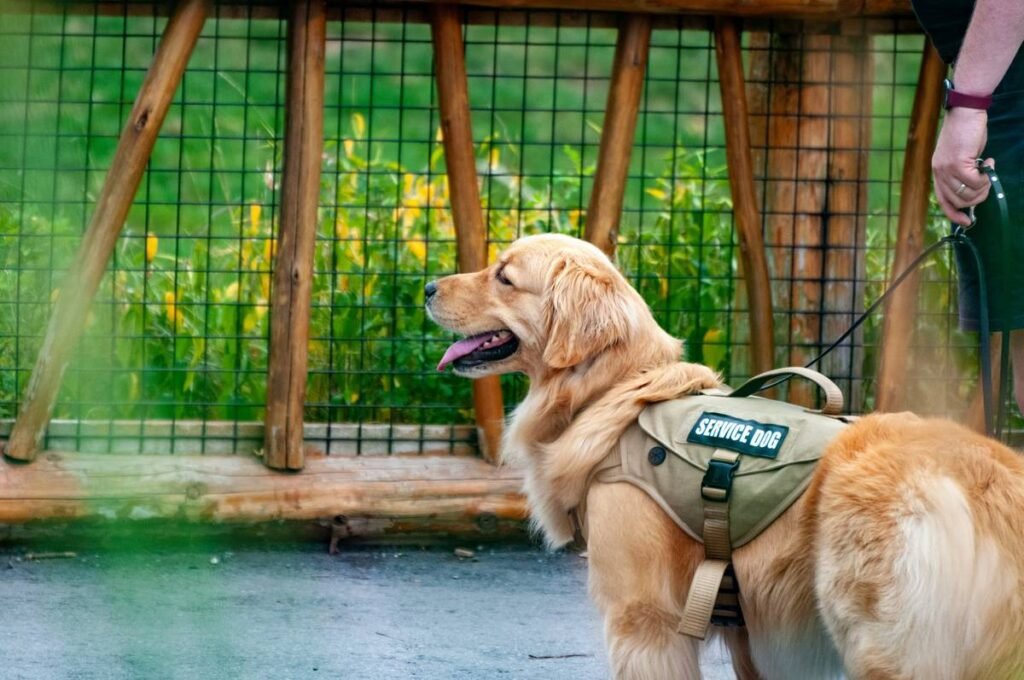
- Leave the vest optional (but consistent). Vests aren’t required by law, but they reduce questions. Just don’t rely on them as a “magic pass”—behavior matters far more.
- Practice “leave-it” like your independence depends on it. Because it does. Food drops, loose leashes, toddlers with ice cream—your dog must ignore them all.
- Carry cleanup supplies. Even service dogs have accidents. Being prepared shows respect for shared spaces.
- Exit gracefully if overwhelmed. One meltdown doesn’t equal failure. Retreat, reset, return another day.
- Never leave your dog unattended. Not even “for one second” while you grab coffee. A tethered, unsupervised service dog = fair game for interference.
- Know your state laws, but defer to federal ADA standards. Some states add extra protections—but ADA sets the floor, not the ceiling.
- Document incidents discreetly. Note date, time, location, staff names, and what was said. This protects you if you need to file a complaint with the DOJ.
⚠️ Terrible Tip Warning ⚠️
“Just tell them it’s a support animal—it’s easier!” NO. Emotional support animals (ESAs) do NOT have public access rights under the ADA. Misrepresenting your dog erodes trust and hurts everyone who relies on legitimate service animals. Don’t do it.
Real-World Case Study: Calm in Chaos at O’Hare Airport
Last winter, I accompanied Maya, a diabetic alert dog handler, through Chicago O’Hare during a holiday travel rush. Over 200,000 passengers. Loudspeakers blaring. Suitcases clattering. Toddlers wailing.
Maya’s Lab mix, Rico, stayed glued to her left side, scanning for glucose drops. When TSA requested a “private screening” (permitted under ADA), Rico remained calm on cue—even as an X-ray machine whirred inches away. Result? Zero disruptions. Smooth boarding. And a gate agent who quietly thanked Maya for “making this easier for everyone.”
The secret? 18 months of scenario-based training that prioritized real-world distractions over obedience perfection. Rico wasn’t trained to heel like a show dog—he was trained to function like a medical device.
Frequently Asked Questions About Service Animal Public Access
Can a restaurant refuse entry because my service dog might “disturb other guests”?
No. Fear, allergies, or generalized discomfort from other patrons are not valid reasons for denial under the ADA. However, if your dog is out of control or not housebroken, the business may ask you to remove it.
Do I need to register my service animal?
No federal registry exists. Any website selling “certification” or “ID cards” is selling novelty items—not legal authority.
What if someone claims my dog is “too big” for a small boutique?
Size is irrelevant. As long as your dog can perform its task and remain under control, the business must accommodate you. The ADA explicitly rejects size or breed restrictions.
Can airlines still require forms for service animals?
Yes—but only for U.S. carriers under DOT rules (separate from ADA). Airlines may require the DOT Service Animal Air Transportation Form, but they cannot ban service animals based on breed alone.
Conclusion
Service animal public space etiquette isn’t about perfection—it’s about preparedness, clarity, and mutual respect. When your dog behaves professionally and you respond confidently to challenges, you’re not just advocating for yourself. You’re paving the way for every handler who comes after you.
So next time someone reaches for your dog’s head, channel your inner Grumpy Optimist: sigh dramatically… then educate gently. Because the world needs fewer assumptions and more understanding—one well-mannered service team at a time.
Like a 2004 flip phone with T9 texting—simple, reliable, and gets the job done without fanfare.