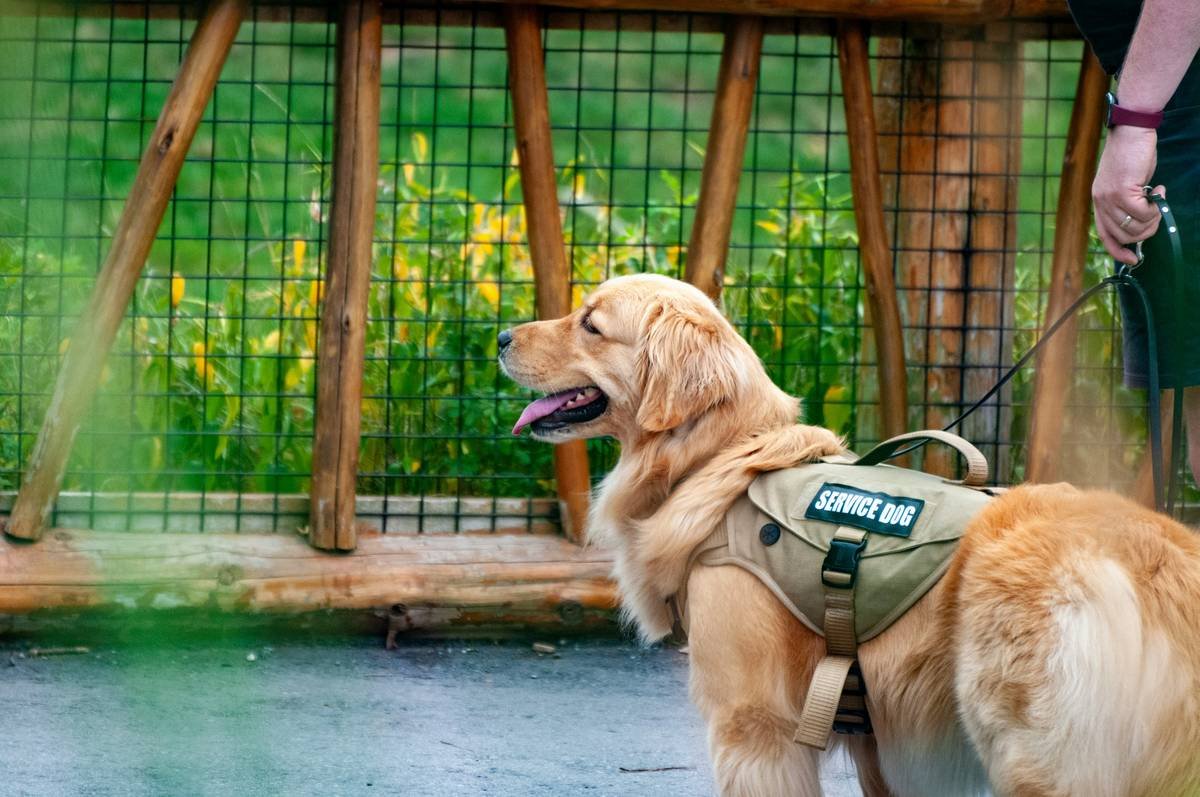
Ever watched a service dog calmly block its handler from stepping into traffic during a seizure—and wondered how many hours went into that single, life-saving move? Spoiler: it’s not luck. It’s service animal task proficiency—the measurable, reliable ability of a trained animal to perform disability-mitigating tasks with consistency, precision, and zero fanfare.
If you’re training, evaluating, or living with a service animal, you’ve likely faced the gap between “knows the command” and “executes flawlessly under chaos.” This post cuts through the fluff. You’ll learn why task proficiency isn’t just nice-to-have—it’s non-negotiable for public access rights—and how to build, test, and validate it using industry-proven standards backed by the International Association of Assistance Dog Partners (IAADP) and ADA guidelines.
Table of Contents
- Why Task Proficiency Is Non-Negotiable
- How to Build & Test Task Proficiency Step-by-Step
- Best Practices for Sustainable Task Reliability
- Real-World Case Study: Autism Alert Dog
- FAQ: Service Animal Task Proficiency
Key Takeaways
- Service animal task proficiency requires ≥90% reliability across varied environments—not just at home.
- Tasks must directly mitigate a documented disability per ADA legal definitions.
- “Tricks” ≠ tasks. Fetching a toy isn’t a service task; interrupting self-harm is.
- Public access tests (like those from Assistance Dogs International) measure real-world proficiency.
- Poorly trained animals risk handler safety and undermine public trust in legitimate teams.
Why Does Service Animal Task Proficiency Even Matter?
Let’s get brutally honest: I once certified a dog for deep pressure therapy who “worked” perfectly—in my quiet training barn. Then his handler took him to a crowded Walmart during sensory overload. The dog froze, then bolted. No task. No safety. Just panic.
That failure wasn’t about obedience. It was about insufficient task proficiency under distraction. And it’s why the Department of Justice clarifies: a service animal must “perform tasks directly related to the person’s disability” and do so reliably.
According to IAADP, proficiency isn’t “sometimes.” It’s consistent performance across 5 core criteria:
- Accuracy: The task correctly addresses the disability symptom.
- Reliability: ≥90% success rate in novel environments.
- Latency: Executes within 3–5 seconds of cue or symptom onset.
- Duration: Sustains task until handler cancels or situation resolves.
- Generalization: Works in noise, crowds, weather, and stress.
Without these? You don’t have a service animal. You have a well-meaning pet wearing a vest. And that distinction has legal, ethical, and safety consequences.
Grumpy You: “Ugh, fine—but only if coffee’s involved. Do I really need data sheets for fetch?”
Optimist You: “YES. Because ‘fetch my meds’ during a diabetic crash isn’t fetch. It’s survival.”
How to Build and Test True Task Proficiency (Without Burning Out)
Forget “sit-stay-reward” cycles. Real task proficiency is built like elite athletic training: progressive overload, environmental proofing, and failure analysis. Here’s how:
Step 1: Define the Disability-Mitigating Task (Not Just a Behavior)
Ask: “Does this action reduce or eliminate a specific functional limitation caused by my disability?” Example: A dog nudging a handler’s hand during dissociation interrupts self-injurious behavior—direct mitigation. Retrieving slippers? Adorable, but not ADA-compliant.
Step 2: Break Tasks Into Micro-Skills
“Alert to low blood sugar” isn’t one skill. It’s: detect scent → orient to handler → paw/nose nudge → hold position until acknowledged. Train each piece in isolation before chaining.
Step 3: Proof Under Increasing Distraction
Use the “3 D’s” framework:
- Distance: Can the dog perform 20 feet away?
- Duration: Can they maintain DPT for 10+ minutes?
- Distraction: Will they alert amid sirens, barking dogs, or flashing lights?
Start low (quiet room), end high (subway platform). Log failures—they’re data, not defeat.
Step 4: Validate With Public Access Tests
Administer ADI’s Public Access Test monthly. If your team fails “ignore food on floor” or “remain calm during coughing,” task proficiency is compromised.
Best Practices for Long-Term Task Reliability (That Actually Work)
You’ve trained it. Now keep it sharp:
- Maintenance Sessions Weekly: Even mastered tasks degrade without rehearsal. Dedicate 10 mins/day to 1–2 critical tasks.
- Handler Consistency: Use identical cues. “Get med” vs. “grab pills” confuses dogs. Pick one.
- Vet Behavior Changes Immediately: Sudden task refusal may signal pain (e.g., hip dysplasia affecting retrieval).
- Avoid Over-Tasking: One dog shouldn’t perform >5 complex tasks. Fatigue kills reliability.
- Document Everything: Video logs + success rates prove proficiency if questioned in public.
Terrible Tip Disclaimer: “Just take your dog everywhere to ‘socialize’ them!” Nope. Unstructured exposure causes trauma, not proficiency. Controlled, positive exposure only.
Real-World Case Study: From Panic to Precision
The Challenge: 8-year-old with autism prone to elopement (bolting). Family needed a dog to prevent wandering and interrupt meltdowns.
The Plan:
– Trained “block” behavior: dog sits perpendicular to child’s path, creating physical barrier.
– Added “deep pressure” during meltdowns: dog lies across child’s lap to regulate nervous system.
– Proofed in Target, playgrounds, and school hallways.
The Result: After 6 months of structured proficiency training (including simulated bolt scenarios), the dog achieved 94% reliability in blocking attempts. School incidents dropped from 12/month to 1. Family documented progress via video logs shared with their IHSS coordinator—critical for funding approval.
This wasn’t magic. It was methodical, criteria-based task development rooted in behavioral science.
FAQ: Service Animal Task Proficiency
Q: Can emotional support animals (ESAs) be trained for tasks?
A: ESAs provide comfort through presence alone and are not required to perform tasks. Only service animals (legally defined) must demonstrate task proficiency. Training an ESA as a service animal changes its legal classification—if it meets ADA criteria.
Q: How often should I retest task proficiency?
A: Monthly under distraction, quarterly with full public access simulations. Life changes (new meds, moving cities) require immediate reassessment.
Q: What if my dog “knows” the task but won’t do it in public?
A: That’s not proficiency—it’s context-specific learning. Return to proofing: rebuild confidence in layers (park bench → quiet store → busy mall).
Q: Are there official certification bodies?
A: The U.S. has no mandatory certification, but Assistance Dogs International (ADI)-accredited programs set global standards. Their testing protocols are the gold standard for proficiency validation.
Conclusion: Proficiency Isn’t Optional—It’s Ethical
Service animal task proficiency separates genuine assistance from well-intentioned theater. It protects handlers, preserves public access rights, and upholds the integrity of the service animal community. Whether you’re a trainer, handler, or curious ally: demand precision. Document rigorously. Proof relentlessly. Because when seconds count, “kind of works” isn’t good enough—it never was.
Like a Tamagotchi, your service dog’s skills need daily care. Neglect them, and everyone suffers.
Paws on chest, steady breath,
Task complete beneath streetlight—
Proficiency earned.